


Dental Implants and Implant Restorations for Adults With Special Needs in Voorhees, NJ & Paoli, PA
Dental implants and dental implant restorations offer a way to replace missing teeth with customized solutions designed to restore chewing function, improve stability, and support long-term oral health. Depending on your needs, dental implants may support an individual replacement tooth, a dental bridge, or an implant-supported denture.
At Simply Special Dental, Dr. Rosenthal provides individualized dental care for adults with special needs, disabilities, and medical conditions. With locations in Voorhees, NJ, and Paoli, PA, our practice understands that restorative dental treatment may require additional planning, communication, and accommodations to address each patient’s unique circumstances.
We recognize that adults with developmental disabilities, intellectual disabilities, physical disabilities, sensory sensitivities, behavioral challenges, and complex medical conditions may have different dental care requirements. Dr. Rosenthal considers each patient’s medical history, medications, oral health, functional abilities, communication preferences, and treatment goals when determining whether dental implants and implant restorations may be appropriate.
Our goal is to help adults with special needs maintain a healthy, functional smile through personalized dental care that prioritizes comfort, safety, dignity, and long-term oral health.
Dental Implant Evaluation at Simply Special Dental
Determining whether dental implants are appropriate begins with a comprehensive dental examination and review of your medical history. Dr. Rosenthal evaluates your teeth, gums, bite, and jawbone, using dental imaging when appropriate to assess the available bone and plan treatment.
For adults with special needs or medical conditions, implant planning may involve additional considerations. Medications, underlying health conditions, healing ability, mobility, sensory sensitivities, communication needs, and the ability to maintain oral hygiene may all influence the recommended treatment.
At Simply Special Dental, we take these factors into account rather than treating every patient the same way. When appropriate and authorized, our team can coordinate with caregivers, family members, guardians, physicians, and other healthcare professionals to support a more individualized approach to treatment.
During your consultation, Dr. Rosenthal will explain the potential benefits, limitations, and alternatives to dental implants. If additional specialist care or medical clearance is needed, we can coordinate the next steps based on your circumstances.
Dental Implants for Adults With Disabilities and Medical Conditions
Adults with disabilities and complex medical needs deserve dental care that considers their overall health, comfort, and individual abilities. Simply Special Dental focuses on caring for adults with special needs, including patients who may require additional accommodations or support during dental examinations and treatment.
When evaluating dental implants, Dr. Rosenthal may consider:
- Medical conditions and medications that could affect surgery, healing, or implant success
- Communication preferences and ways to make treatment easier to understand
- Mobility, positioning, sensory, or accessibility requirements
- Previous dental experiences and concerns about treatment
- Caregiver or support-person involvement when appropriate and authorized
- Coordination with physicians or other healthcare providers when medically necessary
- Whether treatment should be divided into shorter or multiple appointments
- Appropriate comfort and anxiety-management options based on the patient’s medical history
- The patient’s ability to maintain oral hygiene and care for the completed restoration
A disability or medical diagnosis does not automatically prevent someone from receiving dental implants. However, implant treatment is not appropriate for every patient. Dr. Rosenthal evaluates each patient’s oral health, medical circumstances, functional needs, and ability to maintain the restoration before recommending treatment.
What Are Dental Implants?
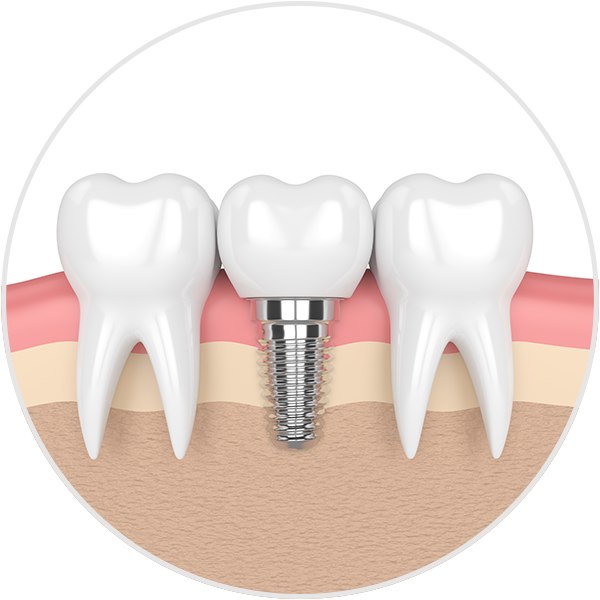
Dental implants are small posts, commonly made from titanium or another biocompatible material, that are placed into the jawbone to replace the roots of missing teeth. As the implant heals, it can integrate with the surrounding bone, providing a stable foundation for a replacement tooth or other dental restoration.
Unlike a traditional removable denture, an implant-supported restoration attaches to implants placed in the jawbone. Depending on the patient’s treatment plan, dental implants may be used to replace a single missing tooth, several missing teeth, or an entire arch of teeth.
Potential benefits of dental implants include:
- Replacing missing teeth with a stable, customized restoration
- Improving chewing function when appropriate for the patient’s needs
- Supporting the jawbone in areas where teeth have been lost
- Providing an alternative to certain traditional removable dental appliances
- Restoring the appearance and function of a patient’s smile
The benefits and suitability of treatment vary by patient. Dr. Rosenthal will explain which options may be appropriate based on your oral health, medical history, and individual goals.
Dental Implant Restorations
A dental implant restoration is the replacement tooth or teeth attached to a dental implant. While the implant itself serves as an artificial tooth root, the restoration replaces the visible portion of the missing tooth or teeth. The restoration is designed to work with the implant and fit the patient’s bite and oral anatomy.
At Simply Special Dental, Dr. Rosenthal considers the patient’s dental needs, functional abilities, oral hygiene requirements, and medical circumstances when planning implant restorations. The goal is to provide a restoration that supports comfortable function and can be maintained over time.
Implant-Supported Dental Crowns
A dental implant crown replaces an individual missing tooth. The crown attaches to an implant through an abutment and is customized to fit the surrounding teeth. An implant-supported crown may be considered when a patient is missing a single tooth and has sufficient bone and healthy surrounding tissues to support treatment.
Implant-Supported Dental Bridges
An implant-supported bridge can replace multiple missing teeth. Rather than relying entirely on natural teeth for support, the bridge attaches to strategically placed dental implants. This option may be appropriate for patients who are missing several teeth in the same area.
Learn more about dental bridges and how they can restore missing teeth.
Implant-Supported Dentures
Implant-supported dentures use dental implants to provide additional retention and stability for a replacement arch of teeth. Depending on the design, these restorations may be removable for cleaning or fixed in place.
For some adults, additional denture stability may make eating and speaking more comfortable. However, implant-supported dentures require appropriate planning and ongoing maintenance. Dr. Rosenthal can help determine whether this type of restoration is suitable based on the patient’s oral health, dexterity, ability to maintain hygiene, and individual needs.
Patients considering other tooth-replacement options can also learn about traditional dentures.
The Dental Implant Treatment Process
Dental implant treatment generally involves several stages, from the initial evaluation to placement of the final restoration. The timeline and procedures depend on the number of missing teeth, the condition of the jawbone, the type of restoration, and the patient’s medical and functional needs.
1. Comprehensive Evaluation and Treatment Planning
Dr. Rosenthal begins by reviewing your dental and medical history and examining your teeth, gums, bite, and jawbone. Dental imaging may be used to assess bone support and determine the appropriate implant position.
For adults with disabilities or medical conditions, this stage may also include planning for communication, positioning, appointment length, accessibility, medication considerations, and coordination with other healthcare providers.
2. Preparing for Dental Implant Placement
Some patients may need additional treatment before an implant can be placed. Depending on the condition of the teeth, gums, and jawbone, this may include tooth extractions, treatment for gum disease, or bone grafting when additional bone support is needed.
Dr. Rosenthal will explain any recommended preparatory procedures and discuss how your medical history may affect treatment planning and healing.
3. Dental Implant Placement
When appropriate, the dental implant is surgically placed into the jawbone. In selected cases, an implant may be placed at the same appointment as a tooth extraction. Whether this approach is suitable depends on the patient’s anatomy, oral health, and treatment plan.
Dr. Rosenthal will discuss the planned procedure, expected recovery, and any necessary accommodations before treatment begins.
4. Healing and Implant Integration
After implant placement, the implant needs time to integrate with the surrounding jawbone. This process, known as osseointegration, provides the foundation for the final restoration. Healing time varies depending on the patient, implant location, bone quality, and whether additional procedures were performed.
During healing, a temporary restoration may be recommended when appropriate. Dr. Rosenthal will provide instructions for protecting the surgical site, maintaining oral hygiene, and attending follow-up visits.
5. Creating the Dental Implant Restoration
Once the implant has healed sufficiently, the next stage involves planning the final restoration. Impressions or digital scans may be used to design a customized crown, bridge, or implant-supported denture.
The restoration is designed to fit the patient’s mouth and provide appropriate function. The type of attachment and restoration depends on the implant system, the patient’s needs, and the treatment plan.
6. Placement and Follow-Up Care
After the restoration is attached, Dr. Rosenthal evaluates its fit, comfort, and function. Follow-up visits help monitor the implant, restoration, and surrounding tissues and provide an opportunity to address any concerns.
The overall process may take several months, although the timeline varies considerably. Some patients require additional procedures or a longer healing period, and treatment may be adjusted to accommodate individual medical and accessibility needs.
Maintaining Dental Implants and Restorations
Dental implants cannot develop cavities, but the surrounding gums and bone can still be affected by inflammation and infection. Regular dental visits, appropriate oral hygiene, and ongoing monitoring are essential to protecting the health of the implant and its restoration.
At Simply Special Dental, we recognize that some adults with disabilities or medical conditions may need assistance with daily oral care. Dr. Rosenthal can discuss practical hygiene strategies with patients and, when appropriate and authorized, their caregivers or support persons.
Long-term maintenance may include:
- Brushing the teeth and cleaning around implant restorations regularly
- Using recommended interdental cleaning aids or other oral hygiene tools
- Attending routine dental examinations and professional cleanings as recommended
- Monitoring the gums and tissues around the implant for changes
- Reporting discomfort, swelling, changes in the bite, or a loose restoration
- Following individualized recommendations based on medical conditions and functional needs
With appropriate planning and maintenance, dental implants may provide long-term tooth replacement. However, the lifespan of an implant and its restoration depends on several factors, including overall health, oral hygiene, and regular professional care.
Dental Implants in Voorhees, NJ, and Paoli, PA
Simply Special Dental provides specialized dental care for adults with special needs at our locations in Voorhees, New Jersey, and Paoli, Pennsylvania. Dr. Rosenthal understands that adults with disabilities and medical conditions may need a dental team that considers their individual circumstances when planning restorative treatment.
Whether you are missing one tooth, several teeth, or need to explore options for replacing a larger number of teeth, our team can evaluate your needs and discuss appropriate treatment options. We serve patients seeking individualized dental care in Voorhees, Paoli, and surrounding communities.
Our approach focuses on understanding each patient’s needs, explaining treatment options clearly, and coordinating care when additional medical or dental support is required.
Schedule a Dental Implant Consultation at Simply Special Dental
If you or a loved one is an adult with special needs and is considering dental implants or implant restorations, Simply Special Dental can help you explore the available options. Dr. Rosenthal will evaluate your dental health, medical history, and individual needs to determine whether implant treatment may be appropriate.
Contact Simply Special Dental to discuss dental implants, implant-supported crowns and bridges, or implant-supported dentures at our Voorhees, NJ, or Paoli, PA, locations. Our team is committed to providing individualized care that respects each patient’s needs and supports long-term oral health.
“`